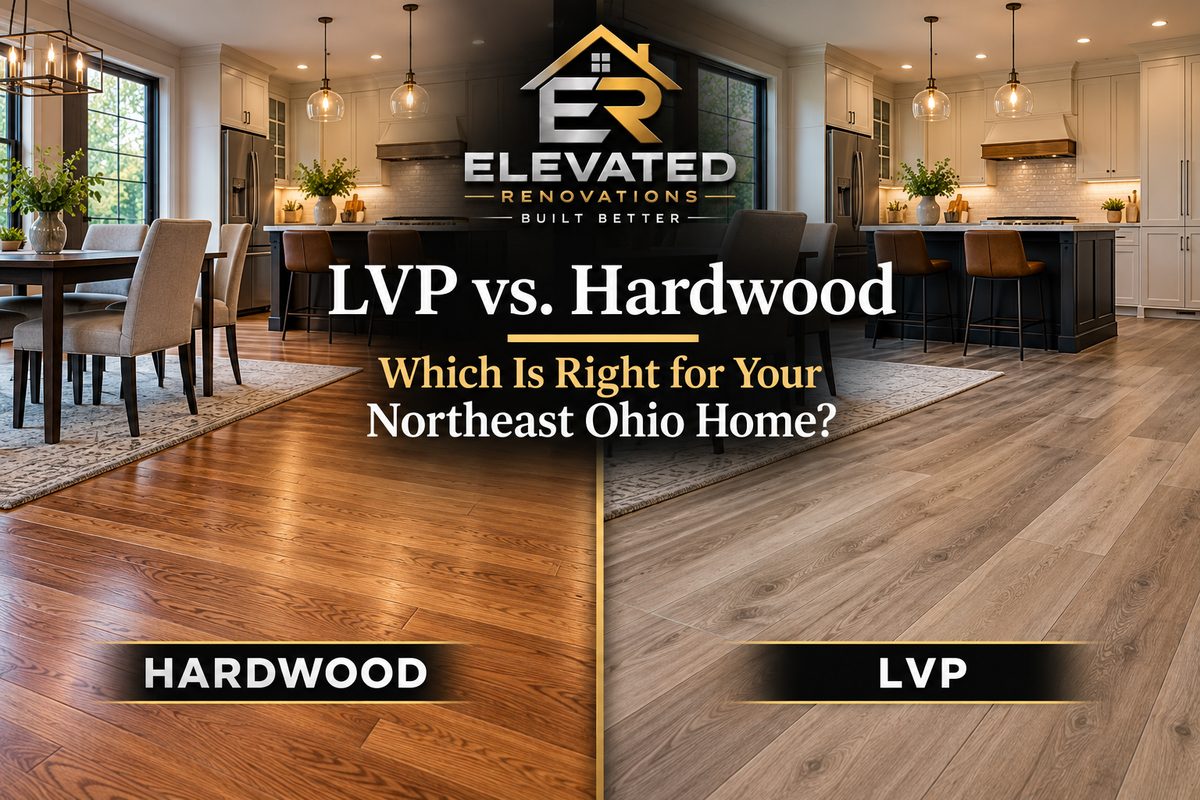
Luxury vinyl plank and hardwood can create a similar visual effect from across a room, but they are very different flooring materials.
For Northeast Ohio homeowners, the choice is not only about appearance. Snow and wet footwear, seasonal humidity, pets, children, kitchens, basements, maintenance expectations, and the condition of the existing floor can all affect which material makes more sense in a particular space.
Neither option is automatically better. The useful question is which one fits the room, the household, and the renovation.
What Is LVP?
Luxury vinyl plank, commonly called LVP, is a resilient flooring product designed in plank form. Many products use printed wood visuals and textured surfaces to imitate the appearance of natural wood.
LVP is available in a wide range of constructions and quality levels. Wear layers, core materials, locking systems, plank dimensions, moisture ratings, and installation requirements vary by manufacturer and product.
That variation matters. “LVP” describes a category, not one uniform product.
What Is Hardwood Flooring?
Hardwood is made from natural wood. Solid hardwood uses wood through the thickness of the plank, while engineered hardwood uses a real wood surface over a layered construction.
Because wood is a natural material, individual boards have variation in grain, color, and character. Wood also responds to changes in moisture and humidity.
For many homeowners, that natural appearance and the way a wood floor develops character over time are central parts of its appeal.
LVP vs. Hardwood: Moisture
Moisture is one of the biggest differences homeowners consider.
Many LVP products are designed to tolerate moisture better than traditional wood flooring, which can make them attractive for kitchens, entries, mudrooms, and some basement applications. The exact performance still depends on the product and installation requirements.
Hardwood requires more care around standing water and repeated moisture exposure. Spills should be addressed promptly, and areas that regularly receive wet shoes or snow need thoughtful protection.
It is also important to separate surface moisture resistance from moisture underneath the floor. A moisture-resistant finished product does not correct an unresolved subfloor or basement moisture problem.
What About Northeast Ohio Snow, Salt, and Wet Shoes?
Winter brings a specific challenge to floors near exterior doors: water, grit, snow, and road salt.
Regardless of flooring type, entry mats and regular cleaning help keep abrasive debris and moisture from being tracked across the house.
LVP can be appealing in these high-exposure areas because many products are designed with moisture resistance in mind. Hardwood can still be used successfully in Northeast Ohio homes, but homeowners should be more attentive to standing water, salt residue, and wet footwear.
The location of the flooring matters as much as the regional climate. A living room away from an exterior entrance experiences different conditions than a mudroom.
LVP vs. Hardwood With Pets
Pets introduce several considerations: claws, tracked-in moisture, accidents, shedding, and frequent cleaning.
Some LVP products provide durable wear surfaces and straightforward cleanup, which can be attractive for pet households. But no flooring is completely scratch-proof, and product quality varies.
Hardwood can scratch and dent, with the amount of visible wear depending on the wood species, finish, color, texture, and household activity. Some homeowners view that wear as part of a natural floor's character; others prefer a surface designed to hide or resist everyday marks.
For either material, the specific finish and product matter more than the category name alone.
Which Is Easier to Maintain?
Both can be relatively straightforward to maintain when cared for correctly, but the rules are different.
LVP generally emphasizes routine sweeping or vacuuming and manufacturer-approved cleaning. Excessive water and incompatible cleaners should still be avoided.
Hardwood also benefits from regular dry cleaning and prompt spill cleanup. Cleaning products and methods should be appropriate for the floor's finish.
The best choice is partly about expectations: consider how much attention you are comfortable giving the floor and what types of wear are common in your household.
Appearance: Natural Variation vs. Manufactured Consistency
Hardwood's appearance comes from real wood. Grain patterns, knots, mineral streaks, and color variation occur naturally.
LVP uses manufactured visuals. Higher-quality products can create convincing wood looks, and repeated patterns may be less obvious in well-designed product lines and installations.
Neither aesthetic preference is universal. Some homeowners specifically want authentic wood; others prioritize a particular color, consistent appearance, or practical performance and are comfortable with a manufactured surface.
How Do They Feel Underfoot?
The feel of either floor depends on more than the visible plank.
Product construction, thickness, underlayment, subfloor, installation method, and the structure of the home can all influence sound and feel.
Natural wood and resilient vinyl have different tactile qualities. Homeowners who are undecided may benefit from seeing and walking on larger installed samples rather than choosing from a small display board alone.
Can Hardwood Be Refinished?
One of hardwood's distinctive characteristics is that certain wood floors can be refinished when the surface becomes worn.
How many times refinishing is possible depends on the flooring construction, remaining wear surface, condition, and previous work. Solid hardwood and engineered hardwood should not be assumed to have identical refinishing potential.
LVP is not refinished in the same way. If individual areas become damaged, repair typically involves replacing affected planks when the installation and available matching material allow it.
That difference can matter to homeowners thinking about how they want the floor to age and be maintained over the long term.
Trying to choose between LVP and hardwood? The right answer depends on the room, existing floor system, moisture exposure, and how you expect the space to perform. Talk with us about your flooring project. Request a free quote →
Which Is Better for a Kitchen?
Both LVP and hardwood can appear in kitchens, but the tradeoffs are different.
LVP may appeal to homeowners who prioritize moisture tolerance and easy cleanup around sinks, dishwashers, refrigerators, and food preparation areas.
Hardwood can provide visual continuity when a kitchen connects directly to hardwood dining or living spaces, but it requires appropriate care around water.
If the flooring is part of a full kitchen renovation, cabinet layout, appliances, finished floor height, transitions, and installation sequence should all be considered before choosing the material.
Which Is Better for a Basement?
Basements require more caution because below-grade conditions can differ significantly from the rest of the home.
Before installing either material, existing moisture conditions and the substrate should be evaluated. Product manufacturers may place specific restrictions on below-grade installation.
Certain LVP products are commonly considered for basements because of their construction and moisture-related specifications. Traditional solid hardwood is generally a more complicated choice below grade.
Engineered wood is a separate category and may have different installation possibilities, but the specific product and site conditions still control the decision.
Which Works Better in Open-Concept Spaces?
Open floor plans often benefit visually from continuous flooring because fewer transitions can make connected rooms feel more unified.
Hardwood can provide a natural, continuous surface through living, dining, hallway, and kitchen areas when the conditions are appropriate.
LVP can also create continuity across large areas, particularly when homeowners want similar performance through spaces with different levels of moisture exposure.
Before running either material across several rooms, consider expansion requirements, transitions, floor heights, manufacturer limitations, and how the material will meet stairs or adjacent rooms.
What About Scratches, Dents, and Everyday Wear?
No floor stays untouched forever.
Hardwood can scratch and dent, although species, finish, sheen, texture, and color influence how noticeable wear becomes. The possibility of future refinishing can be an advantage for certain wood floors.
LVP wear surfaces are designed to handle everyday traffic, but they can also scratch, gouge, or become damaged. Unlike wood, damage is not corrected by sanding and refinishing the surface.
Instead of asking which material cannot be damaged, consider which type of wear you are more comfortable maintaining or repairing.
Subfloor Preparation Matters for Both
A flooring product cannot compensate for every problem underneath it.
Uneven, damaged, unstable, or moisture-affected substrates can create issues regardless of the finished material. The installation requirements for LVP and hardwood differ, but both benefit from careful evaluation and preparation.
This is especially important during renovations where old flooring has been removed and previously hidden conditions become visible.
Should You Choose Flooring Based on Resale Value?
Homeowners often hear broad claims about which flooring buyers prefer. Preferences vary by buyer, neighborhood, home style, room, and the quality of the installation.
A well-executed floor that fits the house can contribute to the overall appeal of the home, but flooring should not be selected solely on assumptions about a future buyer.
If you expect to live in the home for years, daily use, maintenance, appearance, and fit with the rest of the house deserve substantial weight in the decision.
Questions to Ask Before Choosing LVP or Hardwood
Before deciding, ask:
- Where will the flooring be installed?
- How much moisture does the area encounter?
- Is the space above grade or below grade?
- Are pets or children part of the household?
- How close is the flooring to an exterior entrance?
- How much maintenance are you comfortable with?
- Do you specifically value natural wood?
- Is future refinishing important to you?
- What is the condition of the existing subfloor?
- Will the flooring continue through several connected rooms?
- Is it part of a larger kitchen or home renovation?
Those answers usually narrow the choice more effectively than comparing appearance alone.
Planning New Flooring in Northeast Ohio?
LVP and hardwood can both be strong flooring choices, but they solve different priorities.
If moisture tolerance, straightforward maintenance, or use in certain high-traffic spaces is a major concern, an appropriately selected LVP product may deserve consideration. If natural material, wood character, and the potential to renew the surface over time are priorities, hardwood may fit the project better.
The final decision should account for the specific room, existing conditions, product specifications, and how the household uses the space.
For a broader look at tile, laminate, carpet, engineered wood, LVP, and hardwood, see our guide to the best flooring options for Northeast Ohio homes.
Planning new flooring or a larger renovation in Northeast Ohio? Request a free estimate and we'll talk through your space, priorities, and flooring options.
Flooring installation → · See our work → · Request a free quote →
Every home is different. Whether a floor suits a room depends on the subfloor, moisture conditions and the manufacturer's installation requirements for the specific product. Last reviewed October 2026.